
Smart Growth Principle 7
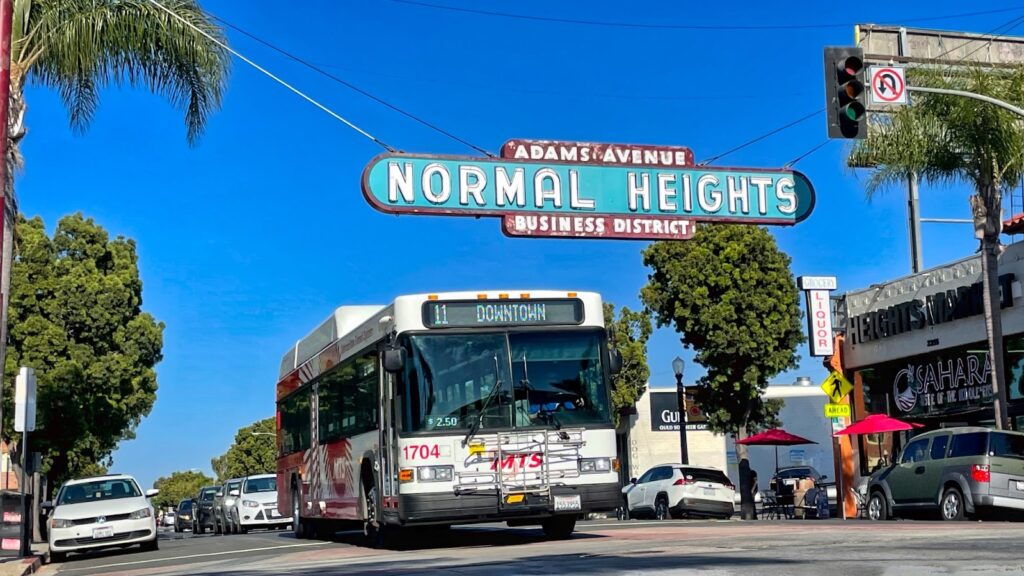
Number 11 bus on Adams Ave. – photo by Paul Coogan
By Paul Coogan
Development in existing communities using Smart Growth guidelines can revitalize older neighborhoods by utilizing existing infrastructure while reducing environmental impact. While infill development can spark controversy, when done properly, there is room for everyone to benefit.
Infill development is motivated by both financial and environmental factors. As land increases in value, cost recovery for building must include more density. At the same time, denser urban areas make more efficient use of infrastructure and all forms of transportation. Ideally, infill development will replace vacant parcels, flat parking lots, and aging commercial buildings.
Utilization of existing infrastructure and community amenities is not without limit, thus development projects pay impact fees to be used by the City for capital improvement projects to ensure enough water, sewer, roads, fire stations, police stations, parks and libraries meet the needs of the larger community. Incentive programs put forth by City Council must be carefully crafted to ensure there are no loopholes or giveaways that will leave a community underserved.
The importance of developing infrastructure and services in concert with increased housing capacity cannot be understated. Anyone who has hosted a family gathering knows the impact on the kitchen and bath!
Much infrastructure is out of sight and out of mind leading us to not think about underground pipe capacity until the shower pressure drops. Similarly, road maintenance should occur before cracks become potholes. Services like police, fire, parks, and libraries are more visible but can still be difficult to determine without expertise. Urban studies have produced formulas for determining minimum sizes. For parks this is 2.8 acres for every 1,000 residents. In Normal Heights we currently have only 30% of park and green space needed to meet this benchmark.
Transportation planning needs to include all forms of mobility for walking, biking, riding, and driving. Normal Heights, a “walkers paradise” still needs improvements to paving, parking, bike lanes, sidewalks, and transit services. Especially, getting to Mission Valley and points north. Keep an eye on the development of the Mid-Cities Community Plan and make your opinions known.