
Smart Growth Principle 8
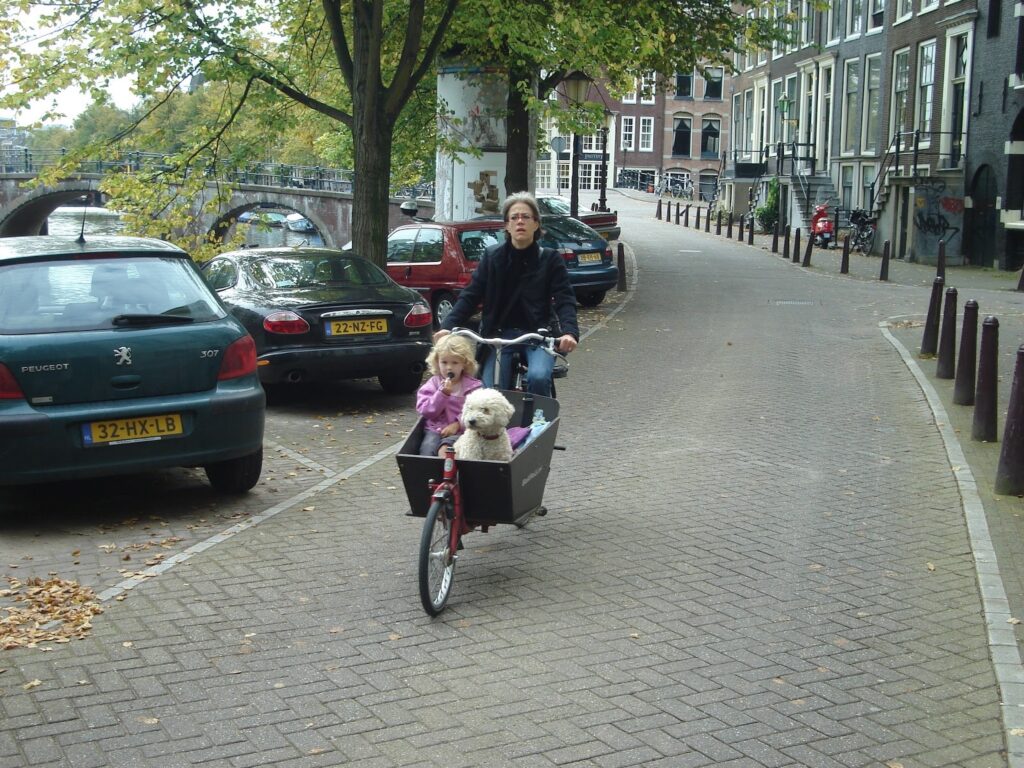
Photo by Paul Coogan
By Paul Coogan, Caroline McKeown, and Maggie Friend
Modern urban planners take into consideration transportation options including buses, rail, bicycles, scooters, and walking while still supporting automobiles. This can be particularly tricky when revising and reconfiguring existing roadways that were designed specifically with cars in mind.
Since the original trolley lines were removed in 1949, Normal Heights has become a car-centric community due to easy freeway access to the east and west, and a lack of adequate public transit. Convenient freeway access makes getting to other points in the county easy for motorists but limits connectivity to adjoining neighborhoods and adds significant congestion to the retail district and community as a whole. As residential density continues to increase there are few solutions, but fortunately, supporting a variety of transportation options provide cost-effective mobility without widening roads.
Supporting a variety of transportation choices means the city must look beyond automobiles and buses and begin to look at all the ways people can move about in and beyond the community.
By ensuring the road and sidewalk configurations support autos, buses, trucks, bicycles, pedestrians, scooters, skateboards, wheelchairs, and more, we can maximize transit options with minimum impact to the surrounding community. To support these micro-mobility methods, surfaces must be regularly maintained to ensure comfortable and safe movement by walking seniors or mobility devices with small diameter wheels. Also, curb management needs to be considered beyond parking use. Curb space is needed by first responders, delivery trucks, rideshare services, buses, utility vehicles, and trash pickup, while curb cuts are critical for accessible mobility. There needs to be a thoughtful balance between these two approaches. The most important element in supporting a wide range of transportation options is the one you can’t see: Time. The usage of streets changes over time. The ebb and flow of commuters, where people need to go and when, as well as deliveries and trash pickup change as our community changes. Data can direct smart usage. This includes measuring the time people spend using mobility solutions, waiting for a connecting bus, or transferring from trolley to scooter, and adapting to meet the needs of the residents while promoting alternate transit options. Successful systems make leaving the car parked a simple choice.
To their credit, the City of San Diego has been working to make the bike paths more connected but still has a long way to go on supporting micro-mobility. It is critical to keep bike lanes clear of parked cars, delivery vehicles, and other obstructions, while also promoting bike use. The availability of rental e-bikes and e-scooters plus defined and enforced parking locations would have a substantial impact in supporting alternate modes of transportation in our city. In addition, we need creative and equitable solutions to transport everyone safely and effectively. The City needs to take a hard look at pedestrian infrastructure and ensure access to high quality public transportation is less than ½ mile to create a fair and equitable mobility plan that benefits everyone.